From Paper to Digital: Why eLogbooks Come Before AI
Everyone's talking about AI. Companies are pouring $30 to $40 billion into generative AI projects, convinced that machine learning will transform their operations. But a 2025 MIT study, The GenAI Divide: State of AI in Business, found that 95% of enterprise AI pilots deliver zero measurable return while only 5% of custom enterprise AI tools ever reach production.¹
The pattern is simple: companies rush into AI before they fix basic data problems, so they spend heavily on models that have nothing solid to train on.
In manufacturing, that shaky foundation is almost always paper. Whether you make pharmaceuticals, aircraft components, packaged foods, or consumer goods, critical data still lives in binders, logbooks, and clipboards. McKinsey estimates that about 30% of staff time in pharmaceutical manufacturing goes into documentation alone.² Parsable found that 79% of factory workers still rely on paper-based documentation.³
The result is predictable: slow release cycles, data integrity risks, and a very expensive barrier to analytics, predictive quality, and AI.
"The hype on LinkedIn says everything has changed, but in our operations, nothing fundamental has shifted."
— COO, mid-market manufacturing firm
This article is about the unglamorous fix that changes that reality. eLogbooks are not just a compliance tool or savings initiative, they are the quiet foundation that makes AI, and every other digital initiative, possible.
Why eLogbooks Are the Right Starting Point
According to Informatica's CDO Insights 2025 survey, data quality and readiness was the top obstacle to AI success, cited by 43% of respondents.⁴ Gartner estimates that at least 30% of generative AI projects will be abandoned by the end of 2025 because of poor data quality.⁵
95% of enterprise AI pilots deliver zero measurable return. The missing ingredient? Clean, digital data.
You cannot train algorithms on paper. You cannot run analytics on filing cabinets. You cannot build predictive models from handwritten entries that never become usable data.
eLogbooks are the right first move because they attack that problem at the source:
- They capture every batch, shift, and check in a structured format.
- They create time-stamped, audit-ready records instead of illegible entries.
- They give you a single source of truth that analytics and AI models can actually use.
Without that, the most valuable use cases stay out of reach. You will not build reliable yield models, deviation predictors, or digital twins if 60% of what happens in the plant lives on paper. You certainly couldn't trust AI modeling that doesn't have a complete picture.
The good news is that eLogbooks do not require a massive rip-and-replace project. You do not need to retrofit every line with sensors or turn IT into a software company. You take the logbooks people already use and make them electronic: same processes and information, now captured digitally with proper controls.
The implementation timeline is measured in weeks, not years. The cost is a fraction of what you already lose to rework, delays, and documentation effort. The risk is low because you can pilot in one area, prove value, and then expand based on real results instead of vendor promises.
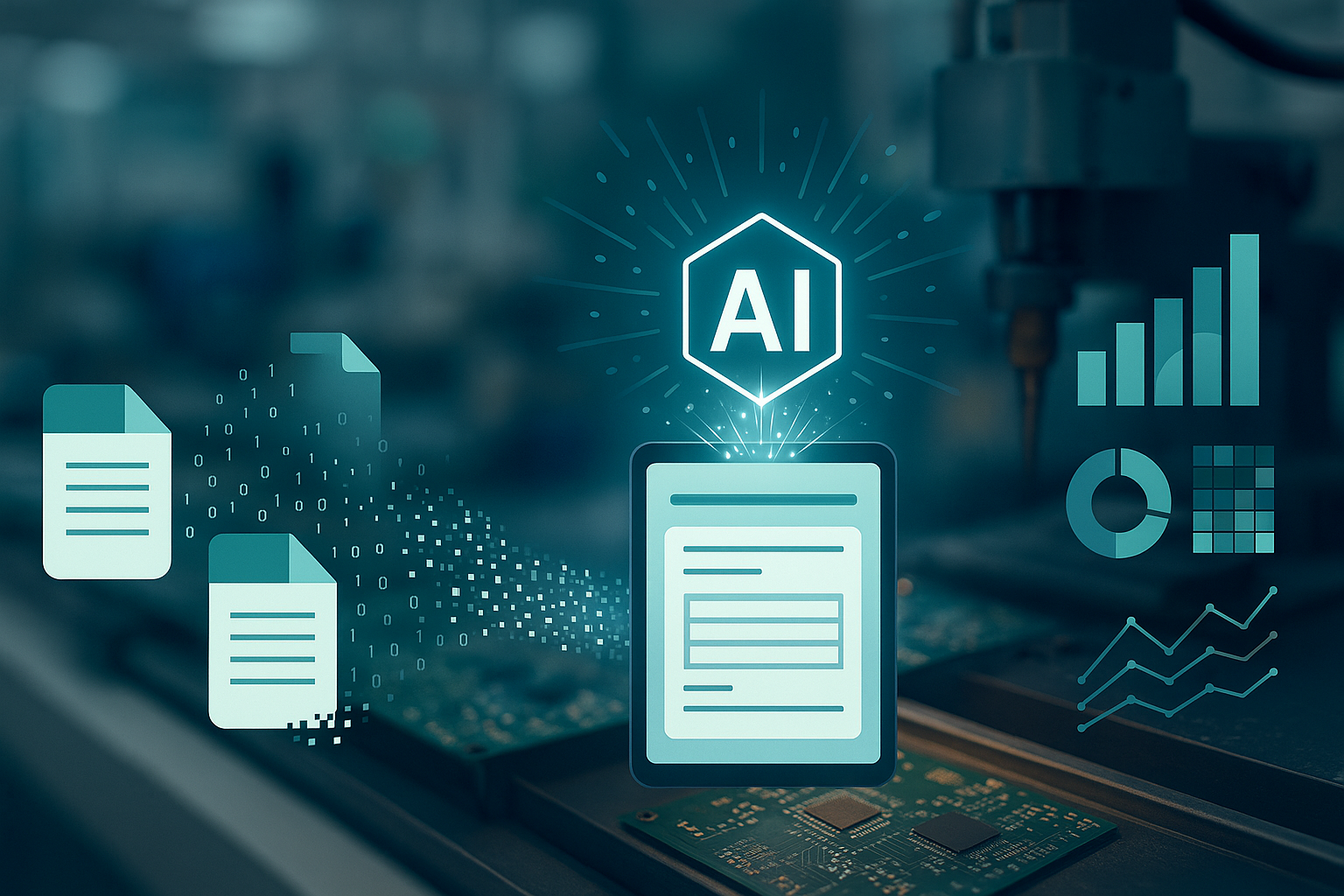
This is also where AI helps instead of adding hype. For example, Atachi eLogbooks uses AI to convert your existing paper forms into electronic versions automatically, which cuts implementation time significantly. AI then becomes an accelerator for digitization, not a shortcut around the hard work of getting your data house in order.
Lessons from the Factory Floor
The shift from paper to digital isn't unique to any one industry. Manufacturers across sectors are making the transition, and the results are instructive.
At a GE factory in Germany, moving from a paper-based process to digital reduced a routine operator task from 25 minutes to 6 minutes, a 76% reduction in time.⁶ More importantly, errors dropped to zero, and the data could immediately be shared and analyzed for further improvements. That's the kind of compounding benefit that paper simply can't deliver.
Research from IIT Dhanbad examining an aircraft manufacturing facility identified 11 critical success factors for paperless transitions.⁷ The findings apply beyond aerospace: success depends less on the technology itself and more on change management, employee training, and executive commitment.
The Parsable study also found that nearly three-quarters of frontline workers expressed no concerns about using digital tools. They actually want access to technology to perform their jobs better. The resistance to digital isn't coming from the shop floor.
What Successful Implementations Look Like
Companies that nail eLogbook implementation share common characteristics. They start with clear objectives: not just "for compliance" but specific, measurable goals like "reduce batch release time by 50%" or "eliminate data integrity observations."
They invest in change management, recognizing that technology is only half the solution. They bring in operators and technicians from day one. They pilot in areas where they can show quick wins (usually QC labs or packaging), then use that success to build momentum.
Most importantly, they pick vendors who understand regulated manufacturing, not just software. There's a graveyard of failed implementations where IT companies thought they could build "simple" logbook systems without understanding GMP requirements, FSMA compliance, AS9100, or the reality of shop floor operations. The MIT study confirmed this pattern in AI as well: companies purchasing from specialized vendors succeed about 67% of the time, while internal builds succeed only about one-third as often.
The Expensive Mistakes You Can Avoid
Mistake 1: Digitizing every line of a broken paper form.
If your paper logbook has 47 fields and only 15 are ever used, copying all 47 into a screen just locks in the waste.
Better approach: Use implementation as a chance to simplify. Start with the fields that drive decisions, quality, and release. Add the rest only if someone can explain the value.
Mistake 2: Underestimating validation.
In regulated industries, eLogbooks must be validated. Teams that treat this as an afterthought end up in months of delay and rework.
Better approach: Plan validation from the start and work with vendors who provide proven validation packages and documentation. The right partner will cut months off the timeline instead of pushing that burden onto your team.
Mistake 3: Treating go-live as the finish line.
Many organizations treat eLogbooks as a one-and-done project. Version one goes live, everyone is exhausted, and improvements stall.
Better approach: Assume the first year is a learning period. Build in time and budget for tuning workflows, reports, and integrations. The organizations that win treat eLogbooks as a continuous improvement engine, not a checkbox project.
Your Monday Morning Action Plan
1. Quantify your current state.
Pull the numbers on how much time your team spends on documentation. Add the cost of recent deviations and delays tied to paperwork. Get uncomfortably clear about what paper really costs you.
2. Build a small coalition.
Find the quality leader who is tired of paper chase. The operations director who wants faster batch release. The IT lead who cares about the bigger digital roadmap. You need a core group that owns the change.
3. Pick your first battlefield wisely.
Choose a pilot area where the process is well understood, and the pain is obvious. QC labs, packaging, and environmental or cleaning logs are common starting points. Avoid the most complex, political area for the first project.
4. Select a vendor who has done this in plants like yours.
Do not hand the problem to someone who wants to "build a simple logbook app." Work with a partner who brings templates, validation packages, and references. Talk to other facilities, and if you can, visit an implementation that looks like the one you want.
5. Commit real resources.
Assign strong people from operations, quality, and IT. Set realistic but aggressive timelines. Treat eLogbooks as a strategic project, not an after-hours side task. Make it clear that this is not optional if the business is serious about AI and digital transformation.
6. Plan the follow-through.
Before you go live, decide how you will capture feedback, tune forms, and expand to the next area. A simple roadmap for the first 12 months keeps the project improving instead of stalling after day one.
The Bottom Line
The manufacturing industry is splitting into digital leaders and analog laggards. Leaders are already pulling ahead in compliance, efficiency, and capability.
The manufacturing industry is splitting in two. Which side of that divide are you building toward?
More importantly, they are laying the groundwork for AI that actually works. The MIT study is clear: AI success depends on high-quality data, and high-quality data depends on digital systems. Organizations that try to skip straight to AI without digitizing their documentation are signing up for the 95% failure rate.
eLogbooks will not solve every part of digital transformation, but they are the logical first step. They deliver immediate value in cycle time, compliance, and labor, while building the base for everything that follows: analytics, predictive quality, AI-driven insights, and whatever comes next.
The real decision is not whether to implement eLogbooks. It is whether to do it now, while you still have the luxury of choice, or later under pressure from regulators, customers, or a crisis.
If you want a practical starting point, begin with a focused eLogbook pilot in one area of your plant and measure the impact. Atachi eLogbooks can help your team scope that pilot, convert existing forms, and validate the system in weeks, not years.
References
- MIT NANDA Initiative, The GenAI Divide: State of AI in Business 2025 (August 2025)
- Schrader, U., "Operations Can Launch the Next Blockbuster in Pharma," McKinsey & Company (February 2021)
- Parsable, Paperless Manufacturing: The Hidden ROI (March 2021)
- Informatica, CDO Insights 2025 survey report
- Gartner, Inc., press release on generative AI projects (2024)
- GE Vernova, Benefits of Paperless Manufacturing on Production Data (2024)
- Pandey, R.D., Sarkar, P., and Singh, S., "Success Factors for a Paperless Ecosystem in Manufacturing," Indian Institute of Technology (ISM) Dhanbad (2023)
Ready to Transform Your Manufacturing Operations?
Discover how Atachi's cloud-based MES solutions can help you digitize operations, improve quality, and build the foundation for AI success.